Crown Reduction in Elephant And Castle
If you are looking for crown reduction in Elephant And Castle, you may already know that a tree can be too large for its setting without needing to be removed. In a busy South London area where homes, shops, flats, schools, offices, shared courtyards, and narrow streets all sit close together, tree management needs to be practical, careful, and responsive to local conditions. Crown reduction is often the right solution when a tree is healthy enough to keep, but its canopy has become too wide, too tall, or too heavy for the space it occupies.
For local property owners, landlords, facilities teams, and residents, the goal is usually straightforward: keep trees safe, attractive, and suitable for the site. A well-done crown reduction can improve light, reduce wind resistance, help manage overhanging branches, and ease pressure on nearby structures, paths, gardens, and utility lines. It can also make a tree look balanced again, rather than simply cut back. That matters in Elephant and Castle, where mature trees often stand alongside newer developments, older terraces, communal spaces, and commercial premises with limited access.
Choosing a local team means working with people who understand the mix of properties, traffic flow, parking restrictions, and access constraints that can affect arboricultural work here. Whether you need help with a tree in a rear garden, a courtyard, a commercial forecourt, or a shared residential space, the right approach should always be tailored to the tree, the setting, and your priorities as the customer.
What crown reduction means for your tree

Crown reduction is the careful shortening of a tree’s canopy to reduce the overall height and spread while keeping the tree’s natural form as much as possible. It is not the same as topping, and it should never be treated as a crude cut-back. A proper reduction is planned around the tree’s structure, species, condition, and future growth. The aim is to remove growth back to suitable pruning points so the tree can recover well and continue to thrive.
In practical terms, this service is often requested when branches are encroaching on roofs, windows, neighbouring properties, pavements, or the road. It may also be used when the crown is unbalanced after years of growth, when a tree is catching more wind than it should, or when a property owner wants to bring a tree back into proportion with the space available. In Elephant And Castle, where gardens and outdoor areas can be compact, this service often makes the difference between keeping a tree and having to consider more drastic action.
It is worth noting that crown reduction in Elephant And Castle should always be assessed on a tree-by-tree basis. Different species respond differently, and the same reduction percentage is not suitable for every tree. A knowledgeable arborist will look at branch structure, the tree’s health, its age, and any signs of stress before recommending the right work.
Why local customers request crown reduction

People contact a local tree service for crown reduction for a variety of reasons, and most of them are tied to day-to-day living. A tree may be blocking natural light into a flat, overshadowing a small garden, dropping branches near a driveway, or brushing against a building. Sometimes the issue is not urgent but still important: a tree may simply be outgrowing its surroundings and making the property feel cramped or untidy.
In and around Elephant and Castle, many properties sit within mixed-use streets where trees need to coexist with parking bays, service entrances, loading areas, and shared walkways. A canopy that looked fine a few years ago can begin to create practical problems as it matures. Crown reduction helps bring the tree back to a manageable size without removing the value that a healthy tree adds to the street or garden.
There is also a visual benefit. A tree that has become overly dense or top-heavy can look neglected, especially when branches are rubbing, crossing, or growing unevenly. A professional reduction can improve shape and structure, making the tree feel more intentional and better maintained. For many local customers, that matters just as much as the practical side.
How the service works

The process usually begins with an on-site assessment. This allows the arborist to inspect the tree, understand its position, and identify any constraints such as overhead cables, nearby buildings, limited vehicle access, or shared boundaries. In a place like Elephant and Castle, those details are often just as important as the tree itself. A good assessment should also consider whether the tree is protected, whether permission may be needed, and what level of reduction is appropriate.
Once the scope of work is agreed, the team will plan the job around access, safety, and waste removal. For some properties, equipment may need to be carried through a narrow passage, around parked cars, or via a communal entrance. For commercial customers, work may need to be scheduled around business hours or footfall. A local team familiar with the area is usually better placed to plan efficiently and avoid disruption.
During the work, branches are reduced back to suitable growth points in a way that encourages healthy regrowth. The focus is on maintaining structure, not simply making the tree smaller at all costs. After the pruning is complete, the site should be left tidy, with arisings removed or processed as agreed. Many customers appreciate this because a tree job can create a large amount of debris, especially when the canopy is substantial.
What is included in a crown reduction service

Every job is different, but most customers want to know what is normally included when they book tree crown reduction. A clear service should cover assessment, safe pruning, and tidy completion. Depending on the site, it may also include sectioning down material, access planning, and removal of waste.
Typical inclusions
- Inspection of the tree and surrounding area
- Discussion of the desired reduction and practical limits
- Careful cutting back of selected branches to suitable points
- Attention to the tree’s shape and long-term health
- Collection and removal of cuttings, unless otherwise arranged
- Site tidy-up after completion
Some customers also ask about follow-up needs, especially if the tree is mature or in a high-exposure location. While no two trees behave the same way, a sensible reduction should leave the canopy lighter and easier to manage for the medium term. Where needed, the arborist may also suggest future maintenance to help keep growth under control.
If you are comparing options, ask not only what will be cut, but how it will be cut. The best results come from people who understand structure, balance, and species response. A neat-looking tree is not enough; the pruning should also support healthy growth after the work is done.
Why crown reduction is often better than removal
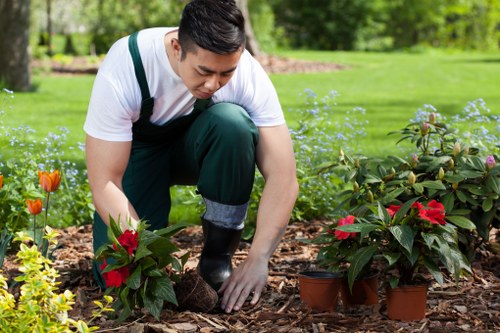
Tree removal is sometimes necessary, but many customers are relieved to learn that it is not always the first or best option. Crown reduction can solve the problem of excessive size while preserving the benefits of the tree. That is especially valuable where shade, privacy, wildlife value, or street appearance matter. In a dense area like Elephant And Castle, keeping a mature tree can add welcome greenery to an otherwise hard-surfaced environment.
For residential customers, the decision often comes down to keeping a garden usable. If a tree is making the space too dark, dropping too much leaf litter, or interfering with fences and sheds, a reduction can restore balance. For commercial sites, the reasons may involve safer pedestrian access, improved visibility, or keeping external areas presentable for staff and visitors.
Of course, not every tree is a candidate for reduction. A responsible arborist will tell you honestly if a tree is too weak, too diseased, or too structurally compromised to be reduced safely. That kind of straightforward advice helps customers make the right decision rather than simply the quickest one.
Local knowledge matters in Elephant and Castle
Elephant and Castle is a part of London where local conditions can significantly affect tree work. Streets can be busy, parking may be limited, and access to rear gardens or communal spaces can be tight. Some properties sit close to main roads, while others are tucked behind blocks, courtyards, or shared entrances. These realities affect how equipment is brought in, how waste is removed, and how safely the work can be completed.
Local knowledge also helps when working around mixed property types. A tree in a private garden may require a very different approach from one beside a shopfront, office, school, or managed estate. Timing may matter too. For some customers, early-day work is best; for others, quieter periods reduce disturbance. A team that regularly works in Elephant and Castle is more likely to understand these practical details and adapt accordingly.
There is also the matter of communication with neighbours and building managers. In shared spaces, a successful tree job often depends on keeping everyone informed about access, temporary obstruction, and expected timescales. Customers appreciate a service that respects the realities of urban living rather than treating the job like a simple suburban garden task.
Property types we commonly help
Tree crown reduction is useful across a wide range of sites in the local area. It is not limited to large gardens or country-style settings. In fact, many of the most common requests come from places where outdoor space is at a premium and trees need to be managed carefully to fit the surroundings.
Common property types include:
- Terraced houses with small front or rear gardens
- Flats with communal courtyards or shared grounds
- Converted buildings with awkward access routes
- Commercial premises with forecourts or rear service areas
- Schools, nurseries, and community sites
- Managed estates and residential developments
In all of these settings, the same basic principles apply: reduce responsibly, protect the tree’s health, and keep disruption as low as possible. The difference is in the planning. A local service provider should be able to adjust the approach to suit the location, rather than expecting the location to suit the work.
Signs your tree may need crown reduction
Many people are not sure whether they need reduction, pruning, or something else entirely. If you are unsure, it helps to look for practical signs that the canopy is becoming too much for the site. These signs do not always mean urgent action, but they are often a good reason to request an assessment.
Common signs include:
- Branches touching buildings, windows, or roofs
- Reduced daylight into rooms or garden spaces
- A canopy that appears too heavy or uneven
- Frequent debris falling into paths or driveways
- Branches interfering with vehicles or pedestrian routes
- Wind movement that makes the tree feel unstable
- Growth that is out of proportion to the site
If you are noticing one or more of these issues, a crown reduction may be the right answer. The key is to act before the problem becomes more disruptive. Trees often respond better when managed early rather than allowed to become awkward, overextended, or damaged by repeated contact with surrounding structures.
Preparation checklist before the work starts
A little preparation can help the job go smoothly and reduce delays on the day. For many local customers, the main concern is simply making sure the arborist can get in and work safely. This is especially important where parking is tight, gardens are shared, or access is through side paths and communal corridors.
Before your appointment, consider the following:
- Move vehicles if access to the tree or waste removal route may be blocked.
- Keep pets and children away from the work area.
- Check whether neighbours need to be informed if branches overhang shared boundaries.
- Clear small items from the garden or area beneath the tree where possible.
- Identify any gates, codes, or access restrictions that may affect entry.
- Raise any concerns about nearby structures, cables, or delicate surfaces.
You do not need to do everything yourself. A professional team should be able to advise you on what matters most for your specific property. However, good preparation often makes a noticeable difference to speed, safety, and convenience.
Pricing factors customers should understand
Most customers want to know what affects the cost of crown reduction before requesting a quote. While exact prices vary from one tree and site to another, there are several common factors that influence the amount of work involved. Being aware of these helps you compare options more confidently and understand what you are paying for.
Pricing is usually shaped by:
- Tree size and height
- Canopy spread and density
- Species and condition of the tree
- Ease or difficulty of access
- Amount of waste to be removed
- Need for specialist equipment or extra labour
- Site constraints such as parking or restricted working space
For example, a tree in a private front garden with clear access may be quicker to handle than a larger tree behind a property with limited entry and no convenient parking nearby. Similarly, a heavy reduction on a broad canopy may require more time than a lighter shaping job. A sensible quote should reflect the real nature of the work, not just a vague estimate based on size alone.
If you are unsure what your tree needs, asking for an inspection is often the best starting point. That allows the arborist to provide advice based on the actual site, which is far more useful than trying to guess from a description alone.
Why choose a local company for crown reduction in Elephant And Castle
There are real advantages to using a team that works locally and understands the area. Elephant and Castle is not a place where every job can be handled in exactly the same way. Traffic, access routes, building layouts, and neighbouring properties all affect how tree work should be carried out. A local company is more likely to anticipate these issues and plan accordingly.
Another benefit is responsiveness. If you are dealing with an urgent issue, such as branches obstructing access or causing concern after strong winds, having a local team makes the response more practical. Even for non-urgent work, local knowledge can make the process smoother from the first enquiry through to completion.
Customers also tend to value a company that understands the character of the area. From older residential streets to modern developments and commercial spaces, the built environment around Elephant and Castle is varied. A tailored approach is important if you want the tree work to look good and function properly after the crew has left.
Residential and commercial crown reduction services
Tree work needs differ between homes and businesses, but both groups benefit from careful planning and professional execution. Residential customers usually want to protect privacy, light, and garden usability, while commercial clients often need to manage safety, presentation, and access for staff or the public. In both cases, crown reduction can be a practical and cost-effective way to keep trees under control.
Residential benefits
- More daylight in living spaces and gardens
- Better clearance from roofs, fences, and sheds
- Improved appearance and balance
- Less interference with neighbouring property
Commercial benefits
- Safer movement around entrances and walkways
- A tidier, more maintained exterior
- Reduced obstruction near signage or lighting
- Work planned around operational needs
Whether you manage a single property or multiple sites, a local arborist should be able to talk through the work clearly and help you choose the right scope. The best outcome is not simply a smaller tree, but a tree that suits its surroundings and remains manageable going forward.
Tree health and responsible pruning
Good crown reduction is as much about tree health as it is about size. Over-pruning, poor cut placement, or removing too much at once can place unnecessary stress on the tree. That is why this work should be carried out by people who understand how trees respond to pruning and how to preserve the natural structure.
Responsible pruning supports recovery by avoiding excessive damage and by keeping the canopy well balanced. It can also reduce the chance of weak regrowth, which is important when a tree has been left to extend too far for too long. In some cases, a staged approach may be more appropriate than a very large reduction in one visit. That kind of judgement is important and can only come from experienced eyes on the tree.
If your tree already shows signs of disease, decay, or dieback, it is even more important to have it assessed properly before work starts. Not every issue can be solved by pruning alone, and a careful inspection helps avoid unnecessary risk or wasted effort.
Frequently asked questions
How much can a crown usually be reduced?
That depends on the species, condition, and structure of the tree. A suitable reduction should always be based on what the tree can tolerate safely and what the site actually needs. A proper assessment is the best way to determine this.
Will the tree grow back quickly?
Most trees will produce new growth over time, but the rate and shape of regrowth vary. Proper pruning encourages healthier regrowth than rough cutting, which is one reason professional work matters.
Is crown reduction the same as pruning?
Crown reduction is a type of pruning, but it has a specific purpose: reducing the overall size of the canopy while preserving the tree’s structure. It is more specialised than light maintenance pruning.
Do I need permission before the work can go ahead?
Some trees may be protected or subject to local controls, so it is important to check before any work begins. A local arborist should be able to help assess whether permissions or notices are relevant.
Can you work around limited access?
In many cases, yes. Limited access is common in Elephant and Castle, and experienced teams are used to dealing with narrow entrances, shared spaces, and restricted parking. The key is to plan the job properly from the start.
What to expect on the day
On the day of the work, you can usually expect a clear, professional approach focused on safety and efficiency. The team will typically review the site again, confirm the scope, and begin work in a way that keeps disruption to a minimum. If access is awkward or the tree is close to buildings, extra care will be taken to manage falling material and keep the area controlled.
For many customers, reassurance comes from seeing that the team is methodical. Branches should be handled carefully, the tree should be shaped with intention, and the site should be left tidy. If waste removal is part of the arrangement, that should be completed as agreed so you are not left with a large cleanup job afterwards.
After the work, it is often helpful to ask what to expect in the weeks ahead. Some trees will respond with fresh growth, and a well-pruned canopy may look slightly different through the first season as it settles. That is normal. The main objective is a healthier, better-proportioned tree that suits the space more comfortably.
Areas covered around Elephant and Castle
Customers looking for crown reduction in Elephant And Castle often need a service that can also cover nearby neighbourhoods and connected parts of central and south London. Because trees and property layouts vary so much, it is useful to work with a local team that serves a wider area and understands the surrounding streets and building styles.
Areas commonly served may include nearby parts of Southwark, Kennington, Walworth, Borough, Lambeth, and surrounding central London locations. The exact scope will depend on the provider, but the benefit for local customers is clear: a team that already knows the area is better prepared for access, parking, and site-specific challenges.
If you have a tree in a location that seems awkward or hard to reach, do not assume it is too difficult to handle. Many urban tree jobs look complicated at first glance, but with the right planning they can be completed safely and efficiently.
Book your crown reduction service
If your tree is becoming too large for the space, now is a sensible time to act. A carefully planned crown reduction can improve safety, light, and appearance while helping you keep a valuable tree in place. For homeowners, landlords, managing agents, and business owners, it is a practical way to solve an overgrowth issue without rushing into unnecessary removal.
When you request a free quote or arrange an assessment, you should expect clear advice, a realistic view of the work, and a service tailored to the property rather than a one-size-fits-all approach. That is especially important in an area like Elephant and Castle, where access and surroundings can affect every stage of the job.
Contact us today to discuss your tree, ask about availability, or request a free quote. Book your service now if you want to get the work scheduled before the canopy creates further issues. If you are not sure whether crown reduction is the right option, a local assessment can help you decide with confidence.